Goethe's Poetic Lens: Nature, Science, and the Soul's Awakening
Johann Wolfgang von Goethe, a towering figure of German literature and a polymath of the Weimar Classicism era, possessed an unparalleled gift for observing the world around him. His poetic genius wasn't merely about crafting beautiful verses; it was an intricate blend of profound scientific understanding, philosophical insight, and a deeply felt emotional sensibility. This unique synthesis allowed him to translate the raw experiences of nature and human existence into works that resonate across centuries. Among his most cherished and frequently quoted pieces is the "Osterspaziergang" (Easter Walk), a vibrant celebration of spring's arrival and the profound awakening it sparks in both the natural world and the human spirit.
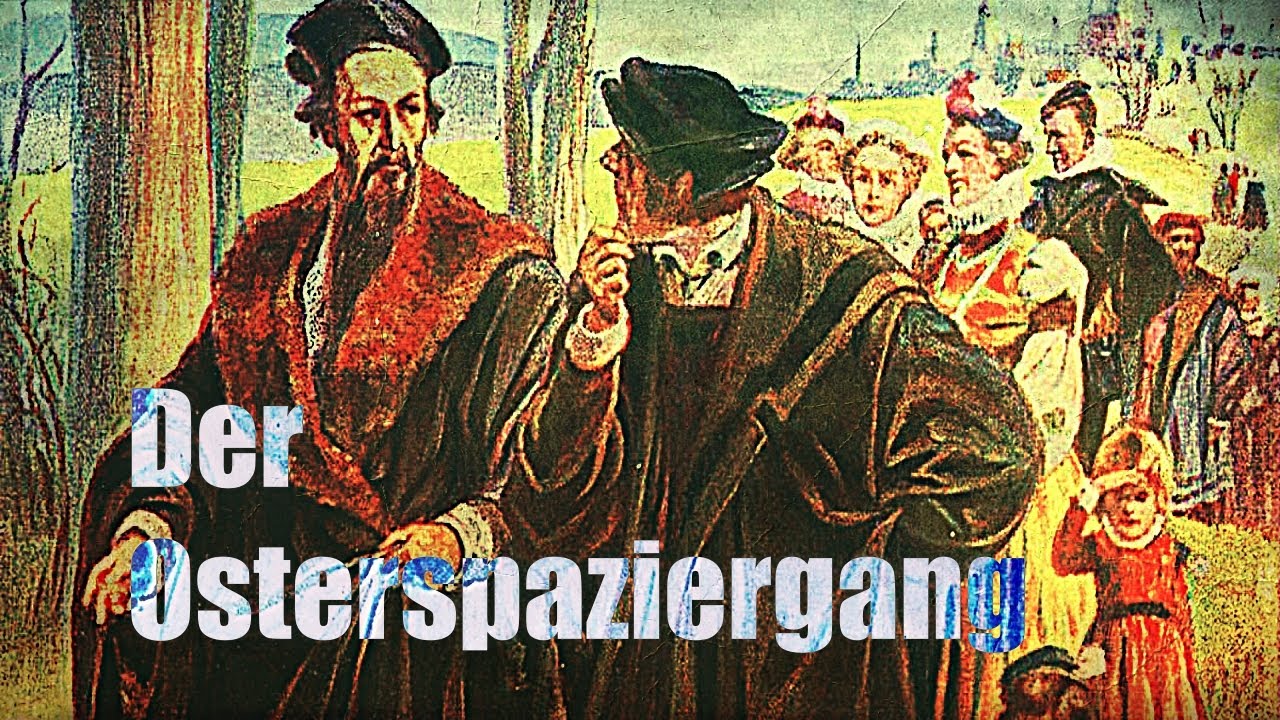
Far from being just a simple poem about spring, the "Osterspaziergang" is an integral part of Goethe's magnum opus, Faust. Der Tragödie erster Teil (Faust: Part One). It appears in the scene "Vor dem Tor" (Before the Gate), where the disillusioned scholar Faust, accompanied by his famulus Wagner, steps out of the stifling confines of the city on Easter Sunday. It is through Faust's eyes that we witness the glorious rebirth of the world, making the poem not just a description but also a reflection of an inner state, albeit one of profound contrast to Faust's own turmoil. To truly appreciate its depth, one must delve into Der Osterspaziergang: Goethe's Iconic Poem from Faust I and understand how this vivid scene sets the stage for Faust's ultimate quest.
Decoding the Spring Awakening: A Journey Through "Der Osterspaziergang Text"
The "Osterspaziergang" is a masterful example of how Goethe uses concrete imagery to evoke universal feelings of hope, liberation, and vitality. While often presented as a standalone piece, understanding its placement within Faust adds a crucial layer of irony and pathos. The poem, comprising 38 lines, can be effectively broken down into three distinct, yet interconnected, movements, each revealing a facet of the spring awakening.
Verses 1-13: Winter's Retreat and Nature's Rebirth
The poem opens with a triumphant declaration that immediately sets the tone: "Vom Eise befreit sind Strom und Bäche / durch des Frühlings holden, belebenden Blick." (From ice freed are stream and brook / by spring's sweet, enlivening gaze.) This imagery is not just literal; it's a metaphor for liberation. The harsh grip of winter, personified as an "alte Winter in seiner Schwäche" (old winter in his weakness), is forced to retreat into the "rauhe Berge" (rough mountains). The sun's benevolent power is absolute, tolerating "kein Weisses" (no whiteness) – a clear signal of winter's final defeat.
In these opening lines, Goethe, the keen observer of nature, details the incremental return of life. The valley "grünet Hoffnungsglück" (greens with the happiness of hope), a beautiful synesthetic image connecting visual renewal with emotional uplift. Although the immediate landscape still "an Blumen fehlts im Revier" (lacks flowers in the area), the underlying impulse of life is undeniable: "Überall regt sich Bildung und Streben, / alles will sie mit Farbe beleben." (Everywhere stirring is formation and striving, / everything wants to enliven itself with color.) This speaks to the inherent drive of nature, a core concept in Goethe's own scientific explorations of metamorphosis and organic growth. It foreshadows the human blossoming that is about to emerge, as nature "takes humans for it" in the absence of flowers.
Verses 14-26: The Urban Exodus and Collective Jubilation
The perspective shifts dramatically from the broad landscape to the bustling human scene. Faust invites Wagner to "Kehre dich um, von diesen Höhen / nach der Stadt zurückzusehen!" (Turn around, from these heights / to look back at the city!). From the "hohlen, finstern Tor" (hollow, dark gate) of the city, a "buntes Gewimmel" (colorful throng) pours forth. This stark contrast between the city's oppressive "niedriger Häuser dumpfen Gemächern" (low houses' dank chambers), the "Handwerks- und Gewerbesbanden" (bonds of craft and trade), and the "Strassen quetschender Enge" (streets' squeezing narrowness) and the boundless freedom of the outdoors is central to the poem's message.
The people, described as celebrating "die Auferstehung des Herrn" (the Resurrection of the Lord), are simultaneously experiencing their own resurrection. They are literally "selber auferstanden" (themselves resurrected) from the daily grind, the darkness of their homes and churches, and the societal pressures that bind them. The "druck von Giebeln und Dächern" (pressure of gables and roofs) gives way to the open sky. This is not just a religious observation; it's a profound, communal liberation, a deeply human need to escape confinement and embrace vitality. It speaks to the universal human desire for respite, joy, and connection with the natural world, themes explored further in Beyond Winter: Exploring Goethe's Osterspaziergang Themes.
Verses 27-38: Human Connection and Faust's Contemplation
The final section paints a vivid picture of the populace joyfully embracing nature. The crowd disperses "behend sich... durch die Gärten und Felder zerschlägt" (nimbly... through the gardens and fields scatters), the river is alive with "manch lustigen Nachen" (many a merry boat), and even from distant mountain paths, "farbige Kleider an" (colorful clothes blink at us). The air is filled with the "Getümmel" (bustle) of the village, creating an atmosphere of vibrant, collective happiness.
It culminates in Faust's profound observation, expressing the people's sentiment: "Hier ist des Volkes wahrer Himmel, / Zufrieden jauchzet gross und klein: / Hier bin ich Mensch, hier darf ich's sein!" (Here is the people's true heaven, / Contented, great and small rejoice: / Here I am human, here I may be!) This line is particularly potent. It articulates the fundamental human desire for belonging, authenticity, and unburdened existence. For the people, this Easter walk is a moment of pure, unadulterated humanity. For Faust, however, this joyful observation is tinged with his own inner conflict. He sees, he understands, but he cannot fully participate in this simple, collective happiness. His intellectual struggles and existential angst set him apart, making the beauty of the scene even more poignant through his detached, yet appreciative, gaze.
Beyond the Text: Why "Osterspaziergang" Resonates Today
The enduring appeal of "Der Osterspaziergang Text" lies in its universal themes that transcend its specific setting and historical context. It's more than an Easter poem; it's an ode to the human spirit's resilience and its innate connection to the rhythms of nature. Here are some insights into its lasting power:
- The Metaphor of Rebirth: The poem beautifully captures the cyclical nature of life, where winter's dormancy gives way to spring's vibrant rebirth. This metaphor extends to personal and societal renewal, offering hope after periods of hardship or stagnation.
- Escape from Confinement: Goethe vividly portrays the human need to escape the physical and metaphorical constraints of daily life – the "dumpfen Gemächern" and "quetschender Enge." This desire for freedom and open space is as relevant today as it was in the 19th century.
- Collective Joy and Human Connection: The sheer delight of the people, coming together in celebration, reminds us of the power of community and shared experiences. In an increasingly isolated world, this vision of collective jubilation offers a comforting ideal.
- Goethe's Observation vs. Faust's Internal State: The genius of placing this joyful scene within Faust is the dramatic contrast it creates. While the world outside bursts with life, Faust is tormented by his intellectual dissatisfaction. This juxtaposition highlights the complexity of the human condition – that external beauty doesn't always translate to internal peace. It invites readers to consider their own relationship with the world and their inner lives.
Practical Insights for Your Own Spring Awakening
Inspired by Goethe's masterpiece, consider how you might invite your own "spring awakening":
- Take Your Own "Osterspaziergang": Step outside, consciously observe the subtle changes in nature – the budding trees, the flowing water, the returning birds. Engage all your senses, just as Goethe did.
- Seek Moments of Liberation: Identify what feels confining in your daily life, and seek small, intentional ways to break free, even if just for a moment. It could be a walk, a creative pursuit, or a quiet moment of reflection.
- Embrace Collective Joy: Connect with friends, family, or community. Share in simple celebrations or outdoor activities. Experience the "buntes Gewimmel" in your own life.
- Reflect on Your Inner Landscape: While observing the outward beauty, take a cue from Faust's contemplative nature. What "winters" are you shedding? What new "springs" are beginning within you?
Goethe's "Osterspaziergang" is more than just a poem; it's an invitation to experience life with heightened awareness, to celebrate the cycles of nature, and to reflect on our own place within them. It reminds us that even in moments of personal struggle, the world continues to offer profound beauty and opportunities for renewal, echoing the timeless message embedded in Beyond Winter: Exploring Goethe's Osterspaziergang Themes.
Conclusion
The "Osterspaziergang" remains a vibrant testament to Johann Wolfgang von Goethe's extraordinary ability to weave together the scientific, the philosophical, and the deeply human into a tapestry of unparalleled beauty. Through its evocative imagery and profound themes, Der Osterspaziergang Text captures the universal triumph of spring over winter, of liberation over confinement, and of hope over despair. It is a celebration not only of nature's rebirth but also of the collective human spirit finding solace and joy in the simple act of stepping out into the blossoming world. As we read it, we are reminded of the timeless power of art to illuminate our own experiences and inspire us to embrace the endless possibilities of renewal that each spring brings.